You want ancestry, not just a look-alike.
Visual checks can suggest a breed group. A reputable genetic test is better suited to exploring genetic ancestry and trait markers.
CAT FIELD NOTES / 01
It’s a great question—and the answer is usually more interesting than a label. Start with a close look, then use how to tell what breed my cat is as your guide to the clues that actually matter.
The honest first answer: coat color or a fluffy tail can be fun hints, but one feature alone rarely proves a breed.
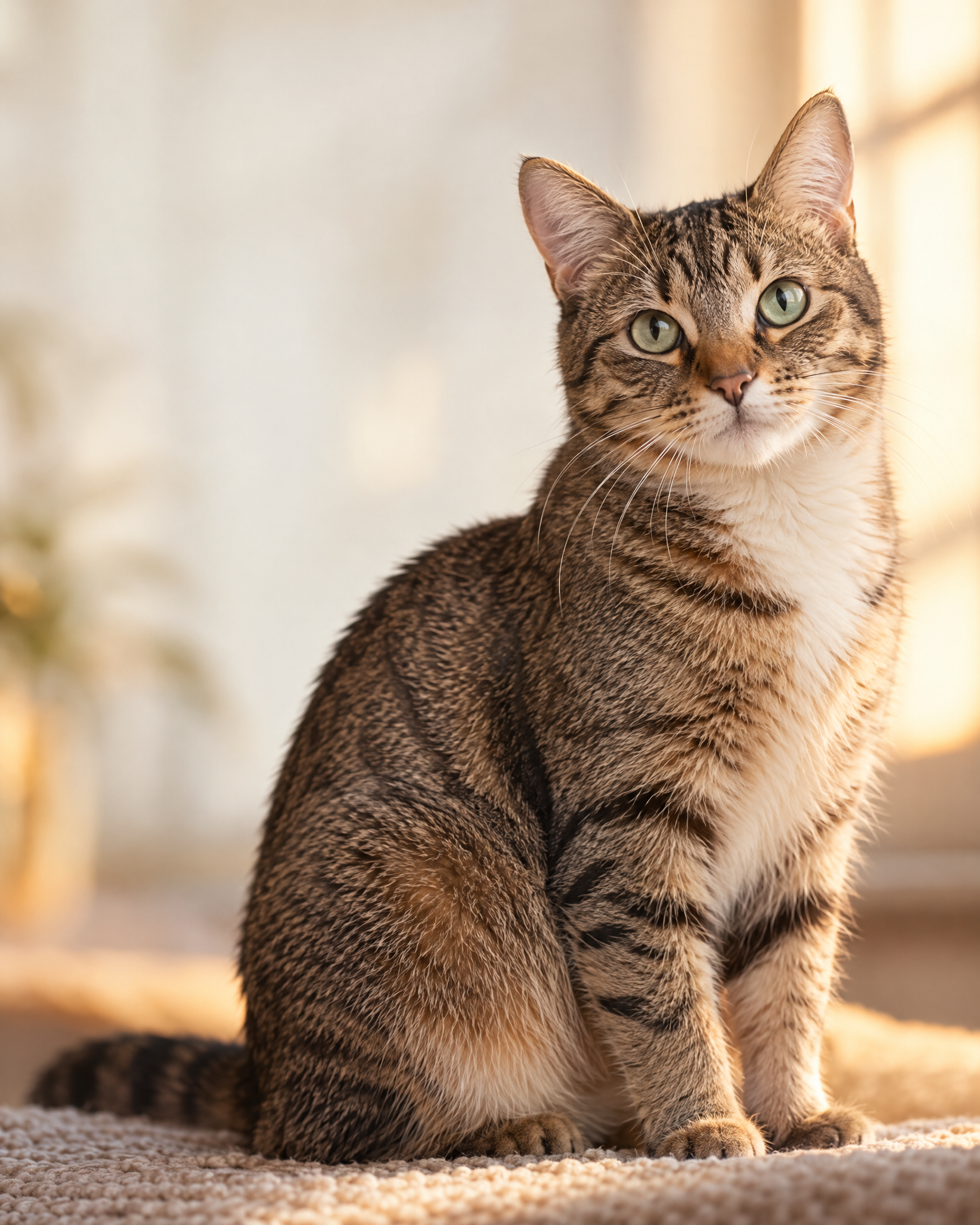 THE COMBINATION
A BETTER WAY TO GUESS
Color, coat, ears, face, and build can point in the same direction. When they don’t, your cat may simply be a one-of-a-kind domestic mix—and that is a perfectly real answer.
THE VISUAL CHECKLIST
Use these five checks like a field guide. Each one narrows the picture a little; together, they make your “what breed is my cat?” search a lot smarter.
THE THREE-MINUTE METHOD
You don’t need a microscope or a breeder’s eye to get more observant. You do need to slow down, compare more than one feature, and leave room for “mixed.”
Use daylight if you can. Notice the body first, then zoom in on the coat, face, and ears. A calm photo from the front and side helps.
A pointed coat plus blue eyes plus a fine, long silhouette says more than any one of those features on its own.
If clues pull in different directions, write down the traits—not a made-up pedigree. Then compare your notes in the full Furriq visual guide.
THE DNA QUESTION
A DNA test is not required to enjoy your cat’s mystery. It can be a smart next step when the answer could inform a real conversation or you want a more genetics-based picture than photos can offer.
Read the visual guide firstVisual checks can suggest a breed group. A reputable genetic test is better suited to exploring genetic ancestry and trait markers.
If a known family history or a suspected trait is relevant, bring the result to your veterinarian. It is context—not a diagnosis.
For breeding or registry questions, ask the organization what it accepts. A DNA report does not replace pedigree paperwork on its own.
Probably skip the kit for now if you only want a playful coat-pattern name, the result won’t change a care decision, or your cat’s best description is simply “beloved domestic shorthair/longhair.”
QUICK REALITY CHECK
No. “Tabby” describes a coat pattern. It can show up in lots of cats, including mixed-breed domestic cats.
A photo can surface strong visual matches. It cannot establish pedigree, and a mixed cat may share traits with many breeds.
Compare your cat’s five clues, then visit the Furriq guide to telling cat breeds apart for a deeper look.
READY FOR A CLOSER LOOK?